Mold problem? Get connected with a local North Shore pro.
Basements, attics, leaks, and that musty smell. Tell us what is going on, and we will connect you with an independent local mold professional who serves your town. It is free to request, and you are under no obligation.
What we can help with
Mold Removal & Remediation
Get connected with independent local mold remediation pros serving Wakefield, Reading, Melrose, Lynn, Peabody and the North Shore.
Mold Inspection & Testing
Find an independent mold inspector for a home purchase, a musty smell, or post-remediation clearance in Wakefield, Reading, Melrose, Lynnfield and nearby towns.
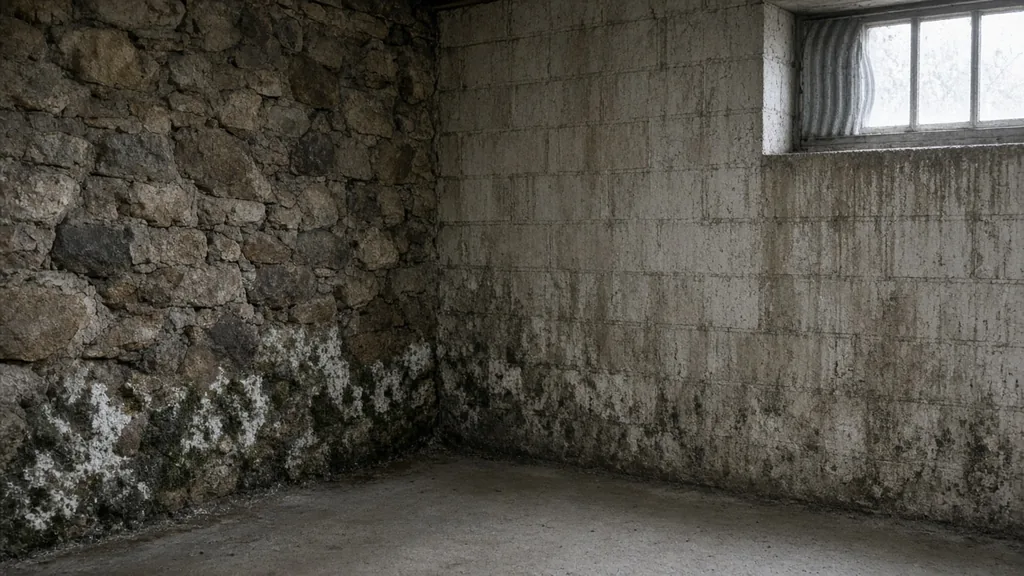
Basement Mold Removal
Musty basement? Get connected with independent local pros for basement mold removal and moisture control in Wakefield, Melrose, Lynn, Peabody, Saugus and nearby.
Attic Mold Removal
Dark staining on roof sheathing? Get connected with independent local attic mold pros serving Reading, Wakefield, Stoneham, Woburn, Wilmington and the North Shore.
Mold After Water Damage
Leak, burst pipe, or flooded basement? Learn the 24-48 hour drying window and get connected with independent local pros serving Peabody, Saugus, Lynn and nearby.
Why mold is a problem
Mold is everywhere outdoors, and a little indoors is normal. It becomes a problem when it grows on damp materials inside your home. Here is what public health agencies say, in plain terms.
It can affect your health
Mold produces allergens and irritants. For some people it causes a stuffy nose, sore throat, coughing or wheezing, burning eyes, or a skin rash, and it can trigger asthma symptoms. Others notice nothing at all.(CDC: About Mold, EPA: A Brief Guide to Mold, Moisture and Your Home, WHO Guidelines for Indoor Air Quality: Dampness and Mould (2009))
Some people are more sensitive
Young children breathe in more air for their size and are more susceptible to mold. People with asthma or mold allergies may react more strongly, and people with weakened immune systems or chronic lung disease can get lung infections from mold.(EPA: Mold Exposure and Respiratory Conditions in Young Children, CDC: About Mold)
It damages your home
Molds gradually destroy the things they grow on, and the longer mold grows, the more damage it can do. In a house that can mean wood framing, drywall, insulation, carpet, and ceiling tiles; porous materials that get moldy may have to be thrown away. Persistent dampness also breaks down building materials on its own.(EPA: A Brief Guide to Mold, Moisture and Your Home, WHO Guidelines for Indoor Air Quality: Dampness and Mould (2009))
It keeps spreading while moisture stays
Mold needs moisture to grow. If you clean up mold but do not fix the leak, condensation, or humidity behind it, the mold will most likely come back. Drying wet materials within 24 to 48 hours helps prevent it.(EPA: A Brief Guide to Mold, Moisture and Your Home, CDC: About Mold)
Musty odors and selling your home
A moldy smell with no visible source can be a sign of hidden mold, and after a proper cleanup there should be no visible mold or moldy odor left. Water damage and mold are also the kind of thing a buyer’s home inspection may point out, so fixing the moisture source early is usually simpler.(EPA: A Brief Guide to Mold, Moisture and Your Home)
Color does not tell you how dangerous it is
CDC says you do not need to know what type of mold you have. "Black mold" (Stachybotrys) should be treated the same as other molds: remove it and fix the moisture problem.(CDC: Facts About Stachybotrys chartarum, CDC: About Mold)
Why mold is so common north of Boston
A lot of the housing here is old. In Melrose, Lynn, and Malden, roughly 45% to 52% of homes were built before 1940, according to U.S. Census Bureau American Community Survey estimates. Older foundations, uninsulated walls, and decades of renovations create plenty of places for moisture to collect.
Add the geography: river and wetland systems like the Saugus, Ipswich, North, and Malden Rivers, coastal storms, spring snowmelt, and humid summers. Damp basements and attic condensation are everyday problems in this region.
The fix is almost always the same: find and stop the moisture, then remove the growth. The EPA's guide to mold, moisture, and your home is a good free starting point. For areas larger than about 10 square feet, the EPA suggests professional help.
Getting help is simple
- Call or fill out the form. Tell us your town and what is going on.
- A local pro contacts you. They talk through the job with you and set up a visit if needed.
- Get a quote and decide. Requesting a quote is free, and you are never obligated to hire.
Towns we cover
Wakefield, MA
Median home built ~1956 · 57% pre-1960
Reading, MA
Median home built ~1960 · 51% pre-1960
Melrose, MA
Median home built ~1938 · 70% pre-1960
Stoneham, MA
Median home built ~1964 · 46% pre-1960
Lynnfield, MA
Median home built ~1964 · 43% pre-1960
Saugus, MA
Median home built ~1962 · 47% pre-1960
Woburn, MA
Median home built ~1968 · 41% pre-1960
Malden, MA
Median home built ~1950 · 56% pre-1960
Lynn, MA
Median home built ~1946 · 63% pre-1960
Peabody, MA
Median home built ~1966 · 40% pre-1960
North Reading, MA
Median home built ~1975 · 28% pre-1960
Wilmington, MA
Median home built ~1979 · 29% pre-1960
Housing figures: U.S. Census Bureau, ACS 2020–2024 5-year estimates.
Frequently asked questions
Is North Shore Mold Pros a mold remediation company?
No. We are a free service that connects homeowners with independent local professionals, who are responsible for their own work, pricing, licensing, and insurance.
Does it cost anything to use this site?
No. Sending a request is free for homeowners, and you are never obligated to hire anyone. We may be paid by the professionals we connect you with.
What towns do you cover?
Wakefield, Reading, Melrose, Stoneham, Lynnfield, Saugus, Woburn, Malden, Lynn, Peabody, North Reading, and Wilmington, Massachusetts.
How do I check a contractor before hiring?
Ask for proof of insurance and any certifications they hold. Get a written scope and price, check reviews and references, and confirm Massachusetts Home Improvement Contractor registration if the job includes construction work on your home.
Is mold in my house dangerous?
It depends on the person and the amount. According to the CDC, mold can cause a stuffy nose, sore throat, coughing or wheezing, burning eyes, or a skin rash in some people, and it can trigger asthma symptoms. People with asthma, allergies, weakened immune systems, or chronic lung disease are more likely to be affected. Either way, the EPA and CDC advise removing indoor mold and fixing the moisture that caused it.
Is "black mold" more toxic than other mold?
Not in a way that changes what you should do. CDC says the color of mold does not tell you how dangerous it is, that it is not necessary to identify the type of mold, and that all molds should be treated the same with respect to health risks and removal.
Will mold go away if I just clean it?
Not if the moisture remains. The EPA says the key to mold control is moisture control: if you clean up the mold but do not fix the water problem, the mold will most likely come back. Wet materials should be dried within 24 to 48 hours to help prevent growth.