Mold Inspection & Testing on the North Shore
A mold inspection answers three questions: is there a moisture problem, where is it, and how big is it? We connect you with independent local inspectors. Many homeowners prefer an inspector who does not also sell remediation, so the findings are unbiased.
Why mold is a problem
Mold is everywhere outdoors, and a little indoors is normal. It becomes a problem when it grows on damp materials inside your home. Here is what public health agencies say, in plain terms.
It can affect your health
Mold produces allergens and irritants. For some people it causes a stuffy nose, sore throat, coughing or wheezing, burning eyes, or a skin rash, and it can trigger asthma symptoms. Others notice nothing at all.(CDC: About Mold, EPA: A Brief Guide to Mold, Moisture and Your Home, WHO Guidelines for Indoor Air Quality: Dampness and Mould (2009))
Some people are more sensitive
Young children breathe in more air for their size and are more susceptible to mold. People with asthma or mold allergies may react more strongly, and people with weakened immune systems or chronic lung disease can get lung infections from mold.(EPA: Mold Exposure and Respiratory Conditions in Young Children, CDC: About Mold)
It damages your home
Molds gradually destroy the things they grow on, and the longer mold grows, the more damage it can do. In a house that can mean wood framing, drywall, insulation, carpet, and ceiling tiles; porous materials that get moldy may have to be thrown away. Persistent dampness also breaks down building materials on its own.(EPA: A Brief Guide to Mold, Moisture and Your Home, WHO Guidelines for Indoor Air Quality: Dampness and Mould (2009))
It keeps spreading while moisture stays
Mold needs moisture to grow. If you clean up mold but do not fix the leak, condensation, or humidity behind it, the mold will most likely come back. Drying wet materials within 24 to 48 hours helps prevent it.(EPA: A Brief Guide to Mold, Moisture and Your Home, CDC: About Mold)
Musty odors and selling your home
A moldy smell with no visible source can be a sign of hidden mold, and after a proper cleanup there should be no visible mold or moldy odor left. Water damage and mold are also the kind of thing a buyer’s home inspection may point out, so fixing the moisture source early is usually simpler.(EPA: A Brief Guide to Mold, Moisture and Your Home)
Color does not tell you how dangerous it is
CDC says you do not need to know what type of mold you have. "Black mold" (Stachybotrys) should be treated the same as other molds: remove it and fix the moisture problem.(CDC: Facts About Stachybotrys chartarum, CDC: About Mold)
Signs you may need help
- You are buying or selling a home and want a moisture and mold check
- There is a persistent musty smell but no visible growth
- You had a leak or flood and want to know whether it dried properly
- You want clearance testing after remediation
What the work typically involves
- Visual inspection & history. The inspector walks the home, attic, and basement and asks about leaks, flooding, and renovations.
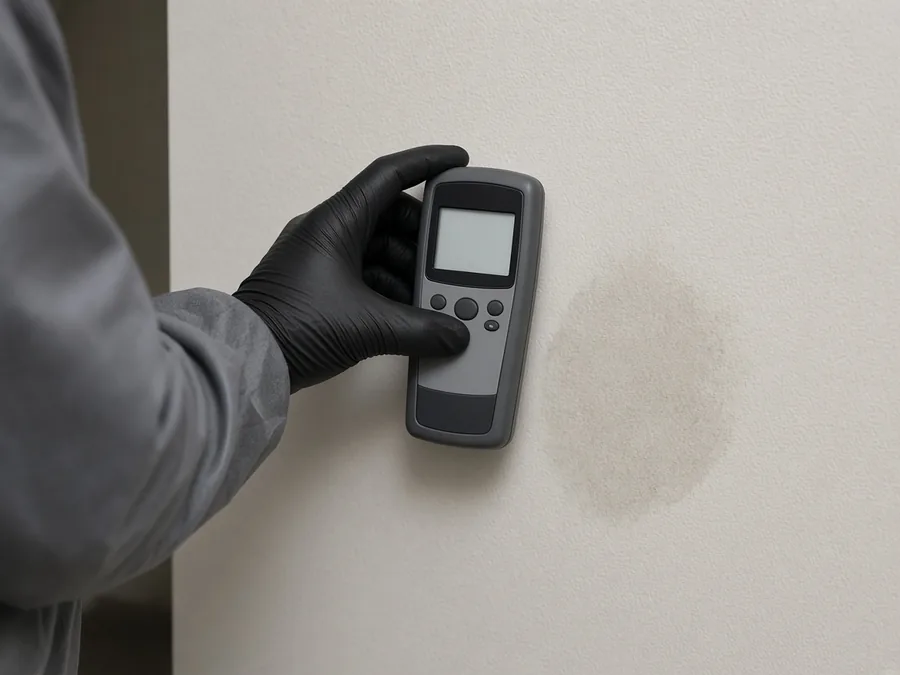
- Moisture mapping. Moisture meters and often thermal imaging locate damp materials behind surfaces.
- Sampling (when useful). Air or surface samples may be sent to a lab. The EPA notes that sampling is not always needed. If you can see mold, you already know you have a problem to fix.
- Written report. You should get a report with photos, moisture readings, likely causes, and a recommended scope.
Every job is different. The pro you speak with will explain their own approach and pricing. North Shore Mold Pros does not perform, supervise, or guarantee any work.
Further reading: EPA: A Brief Guide to Mold, Moisture, and Your Home · EPA: Flood cleanup and indoor air
Frequently asked questions
Do I need mold testing if I can see mold?
Often not. The EPA notes that if visible mold growth is present, sampling is generally unnecessary. The priority is to fix the moisture and remove the growth. Testing is more useful when you smell mold but cannot find it, or for clearance after remediation.
Should the inspector and the remediator be different companies?
Many homeowners prefer that, to avoid a conflict of interest. Ask any pro we connect you with whether they inspect only, remediate only, or both.
Is a mold inspection part of a standard home inspection?
A general home inspector may note visible moisture or suspected mold, but a dedicated mold inspection usually goes deeper with moisture mapping and optional lab sampling.
Is mold in my house dangerous?
It depends on the person and the amount. According to the CDC, mold can cause a stuffy nose, sore throat, coughing or wheezing, burning eyes, or a skin rash in some people, and it can trigger asthma symptoms. People with asthma, allergies, weakened immune systems, or chronic lung disease are more likely to be affected. Either way, the EPA and CDC advise removing indoor mold and fixing the moisture that caused it.
Is "black mold" more toxic than other mold?
Not in a way that changes what you should do. CDC says the color of mold does not tell you how dangerous it is, that it is not necessary to identify the type of mold, and that all molds should be treated the same with respect to health risks and removal.
Will mold go away if I just clean it?
Not if the moisture remains. The EPA says the key to mold control is moisture control: if you clean up the mold but do not fix the water problem, the mold will most likely come back. Wet materials should be dried within 24 to 48 hours to help prevent growth.