Attic Mold Removal in Lynnfield, MA
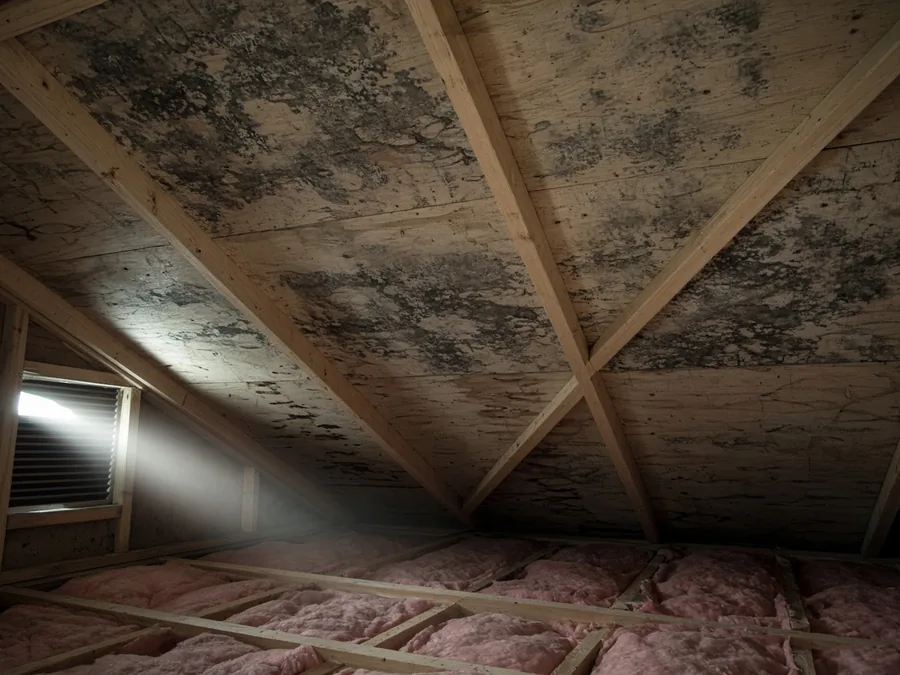
Attic mold usually shows up as dark staining on the underside of the roof sheathing, often on the north side. It is almost always caused by warm, moist air from the house getting into a cold attic, or by roof leaks and ice dams. We connect you with independent local pros who remove the growth and address ventilation and air sealing.
Lynnfield homes at a glance
Source: U.S. Census Bureau, American Community Survey 2020–2024 5-year estimates, via Census Reporter.
What that means for attic mold in Lynnfield
About 43% of homes in Lynnfield were built before 1960, and the median home was built around 1964. In Lynnfield's newer homes, attic mold most often traces back to bathroom fans vented into the attic, recessed lights, or blocked soffit vents rather than age.
Massachusetts winters bring long cold stretches and frequent snow, so ice dams and winter attic condensation are common across the North Shore. In Lynnfield, about 82% of homes are single-family detached, and most of these have their own attic to check.
About Lynnfield
Almost every Lynnfield home relies on a private septic system rather than town sewer.
The town's own planning documents note that much of Lynnfield's soil is poorly suited to septic absorption, especially around Pillings Pond, Reedy Meadow, and upper Chestnut Street. Wet, slow-draining soil is also a common source of basement dampness.
Signs to watch for
- Black or gray staining on roof sheathing or rafters
- Frost on nails or sheathing in winter
- Ice dams along the eaves
- Bathroom or kitchen fans vented into the attic instead of outdoors
- Damp or matted insulation
What the work typically involves
- Find the moisture path. Common causes include bath fans venting into the attic, air leaks around lights and hatches, blocked soffit vents, and roof leaks.
- Remove or treat growth. Methods vary. Ask the pro to explain their approach and what will be left in place.
- Fix ventilation & air sealing. Without this step, attic mold commonly returns.
- Replace insulation if needed. Wet or contaminated insulation is usually removed and replaced after the attic is dry.
Helpful resources: EPA mold guide · FEMA flood map lookup · Mass.gov: Title 5 at property sale · Town of Lynnfield planning document (septic and soils)
Why mold is a problem
Mold can cause allergy-type symptoms and asthma flare-ups in some people, especially those with allergies, asthma, or weakened immune systems. It also slowly damages wood, drywall, and insulation, and it keeps coming back until the moisture source is fixed.
Sources: CDC: About Mold · EPA: A Brief Guide to Mold, Moisture and Your Home · WHO Guidelines for Indoor Air Quality: Dampness and Mould (2009) · EPA: Mold Exposure and Respiratory Conditions in Young Children · CDC: Facts About Stachybotrys chartarum
Attic Mold in Lynnfield: FAQ
Can Mass Save help with attic air sealing in Lynnfield?
Mass Save home energy assessments can include air sealing and insulation for customers of participating utilities. Several communities in our area, including some nearby towns, get electricity from a municipal light department that runs its own efficiency programs. Check with your electric and gas providers about eligibility in Lynnfield. Mold usually has to be fixed before insulation work can go ahead.
When is the best time to treat attic mold in Lynnfield?
Attic work is generally easier in spring and fall, since summer attics get very hot. Diagnose the moisture source as soon as you see growth, though, especially if you have a home sale coming up.
Is attic mold dangerous?
Attic mold is usually less of an indoor air concern than mold in living spaces, but it signals a moisture problem that can damage the roof deck over time. It also matters during a home sale.
Will a new roof fix attic mold?
Not by itself. If the cause is warm, moist air from the house, a new roof will not stop it. Ventilation and air sealing need to be part of the plan.