Mold Inspection & Testing in Reading, MA
A mold inspection answers three questions: is there a moisture problem, where is it, and how big is it? We connect you with independent local inspectors. Many homeowners prefer an inspector who does not also sell remediation, so the findings are unbiased.
Reading homes at a glance
Source: U.S. Census Bureau, American Community Survey 2020–2024 5-year estimates, via Census Reporter.
What that means for inspection & testing in Reading
About 51% of homes in Reading were built before 1960, and the median home was built around 1960. With about 82% of homes owner-occupied, many inspection requests in Reading come up during a purchase or before listing a home for sale.
In Reading, 71% of homes are single-family detached. In two-family and multi-unit buildings, inspectors often need access to the shared basement and neighboring units to trace a moisture source.
About Reading
Reading is a mostly single-family, owner-occupied town, so most mold questions here involve individual homes rather than large apartment buildings.
The Town of Reading publishes its own mold remediation guidance page for residents.
Reading sits on low, rolling ground where three watersheds meet (the Ipswich, Aberjona, and Saugus). The town's open space plan describes it as dotted with swamps and wooded wetlands, including Cedar Swamp and Timberneck Swamp in the northeast.
Signs to watch for
- You are buying or selling a home and want a moisture and mold check
- There is a persistent musty smell but no visible growth
- You had a leak or flood and want to know whether it dried properly
- You want clearance testing after remediation
What the work typically involves
- Visual inspection & history. The inspector walks the home, attic, and basement and asks about leaks, flooding, and renovations.
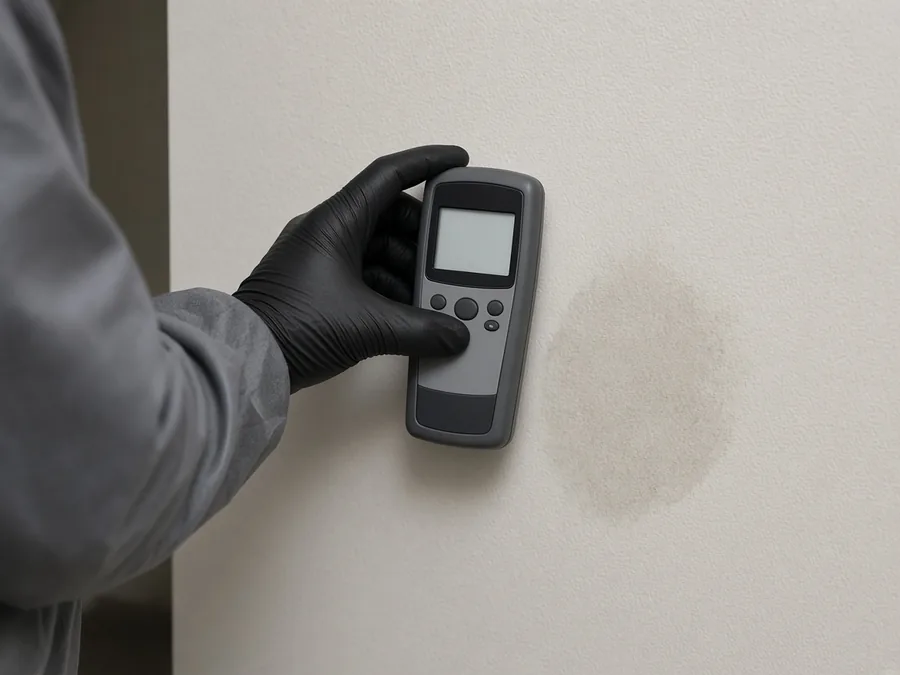
- Moisture mapping. Moisture meters and often thermal imaging locate damp materials behind surfaces.
- Sampling (when useful). Air or surface samples may be sent to a lab. The EPA notes that sampling is not always needed. If you can see mold, you already know you have a problem to fix.
- Written report. You should get a report with photos, moisture readings, likely causes, and a recommended scope.
Helpful resources: EPA mold guide · FEMA flood map lookup · Reading Open Space and Recreation Plan 2022-2029 · Town of Reading: Mold Remediation
Why mold is a problem
Mold can cause allergy-type symptoms and asthma flare-ups in some people, especially those with allergies, asthma, or weakened immune systems. It also slowly damages wood, drywall, and insulation, and it keeps coming back until the moisture source is fixed.
Sources: CDC: About Mold · EPA: A Brief Guide to Mold, Moisture and Your Home · WHO Guidelines for Indoor Air Quality: Dampness and Mould (2009) · EPA: Mold Exposure and Respiratory Conditions in Young Children · CDC: Facts About Stachybotrys chartarum
Inspection & Testing in Reading: FAQ
Is mold testing required to sell a home in Reading?
Massachusetts does not require a mold inspection to sell a home. Buyers often order one as part of their inspection contingency, and sellers sometimes do one before listing to avoid surprises.
What does a mold inspection in Reading cost?
Prices vary by home size, the number of samples, and lab fees. Ask for the price per sample and what the report includes before you book. We do not set or guarantee pricing.
Do I need mold testing if I can see mold?
Often not. The EPA notes that if visible mold growth is present, sampling is generally unnecessary. The priority is to fix the moisture and remove the growth. Testing is more useful when you smell mold but cannot find it, or for clearance after remediation.
Should the inspector and the remediator be different companies?
Many homeowners prefer that, to avoid a conflict of interest. Ask any pro we connect you with whether they inspect only, remediate only, or both.